
Before My Second Cup: 3/30/26
Death Research

Fun fact: my library is not only huge but has a checkout limit of one hundred items. I went in last week and wandered around to the very end of my time limit1 and walked out with eight items. Three books were research for Dead Ends:
All the Living and the Dead by Hayley Campbell
From Here to Eternity: Travelling the World to Find the Good Death by Caitlin Doughty
Smoke Gets In Your Eyes by Caitlin Doughty
There are a few precious things shared across time and cultures, and one of those things is the fact that we all die and we all mourn our dead. How we do so varies wildly. Approaching these traditions with an open mind and heart can both demystify that which we all share and bring us closer to our fellow humans.
When I first started in on my research, I was more looking for different symbols in the world of the dead. We have entities such as Charon or mascots like the crows, but there is more than just the most popular western tropes or our much beloved Greek myths. Those were the things I went in looking for, and, while I did find some, I came across something much richer.
I was telling my husband that one of the things I love about Dead Ends is a world and protagonist where necromancy is not inherently a villain’s zone. Don’t get me wrong: it’s still stigmatized, much like death and funeral work is in our world. In my eyes, that stigma comes from insecurity. Many people struggle with death anxiety—how could you not, honestly?—so coming across those who have not only made peace with it but are comfortable being surrounded by it inspires wariness. The more I read about these workers, though, the more endeared I become to them. I already thought their work was not just cool but absolutely necessary. But now, I see them as our final caretakers. The hands that wash us, clothe us, and place us wherever our remains will, well, remain.
Reading Doughty’s From Here to Eternity has me understanding Margaret Locke on a deeper level than I ever have. I had told Gabe that Margaret is not necessarily cold; she’s practical and, of course, a bit prickly. But that prickliness is more inherent to Margaret than caused by her job. Dealing with irrational people—which is the bulk of her job—brings that out of her. I read Doughty’s accounts of witnessing the ma’nene’ in Indonesia and the open pyre in Colorado, and I could see Margaret there. Not necessarily being festive but being an open-minded, respectful spectator.
I’m currently on the chapter about Dia de Muertos, a tradition I am much more familiar with. In fact, I told my husband last year that I wanted to start setting up an ofrenda on those days. It’s a tradition that I’ve come to love deeply, and I feel that the passing of very dear family members on my Mexican side of the family have only strengthened that love. I don’t realize how much I miss them until I start thinking about putting their pictures up. In French2, when you say you miss someone, you say, “Tu me manques.” Translated, it’s closer to “You are missing from me.” And that’s how I feel when I think of them.
That’s the part of Margaret I feel most closely entwined with: taking pain and loss and having an indescribable need to make it into something productive. Of course, that motive comes from a desire to feel a sense of control over something decidedly out of our control. Reading about others and how they grieve has changed some of my opinions on how I handle these things. In Crestone, Colorado, it’s become a community event when someone passes away and wishes to be cremated on the open air pyre. The body is washed by family members and loved ones most times despite volunteers being available should they not wish to.
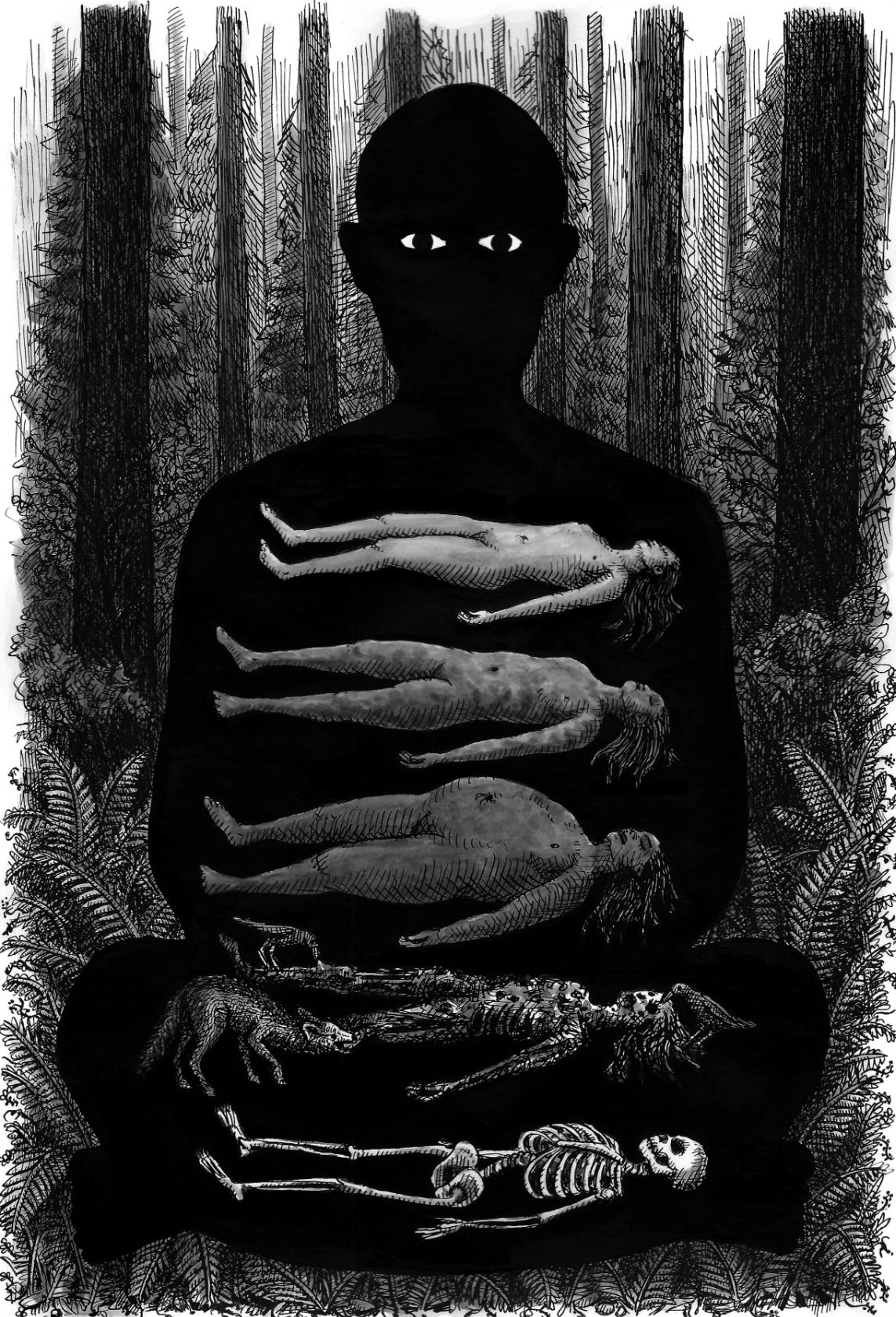
We used to care for our dead ourselves, but now it is—as most things in this modern world are—an industry. Not that there aren’t pros with the cons, but I do think it’s affected our ability to mourn as well as our capacity for connection. When a community comes together to mourn, it comes together to love one another.
On a separate but related note (I promise), I used to not read much nonfiction. Every once in a while I’d pick something up, but I never really got through it. Then, as a Christmas gift a few years back, my mother-in-law got me some nonfiction true crime books. I was new to the family and felt the need to make sure I read them as soon as possible to show that I appreciated the thought and care that went into the gifts. I loved them. Shortly after, Jackie recommended me some nonfiction books she was reading, and I borrowed a couple from her.
I slowly realized that I had lost the joy of learning in my life. After school stopped, for some reason, I had let learning stop. I’d pick up new skills, but I stopped learning about history, culture, politics, economics, philosophy, psychology, and dozens of other ologies out there. Most importantly, I had stopped learning new perspectives. There’s a quote I heard a while back that the smartest person walks into every room knowing they can learn something from everyone in there with them. A more concise (and popular) version of this philosophy is: “If you are the smartest person in the room, then you are in the wrong room.”
I feel the same way about ethics and morality.
All this to say, I find myself unable to stop reading a nonfiction book at least once a month. Lord knows I’ve gotten excellent at collecting them. I just picked up a monstrosity from the used bookstore that’s about cities throughout time and culture: how they’re structured economically, politically, socially, etc. and how they’re categorized based off those factors.
Another quote for you: “Jack of all trades, master of none.”
I dated a guy in high school who was always that guy when it came to these quotes. As much as he encompasses that sort of energy, I did love that about him, because he was right. You’d say, “Curiosity killed the cat,” as a warning to him, and he’d always snap back with, “The whole quote ends, ‘but satisfaction brought it back.’”
“Blood is thicker than water” —> “The blood of the covenant is thicker than the water of the womb.”
“Great minds think alike…” —> “…though fools seldom differ”
“The early bird gets the worm…” —> “…but the second mouse gets the cheese.”
And, of course: “Jack of all trades, master of none” —> “A jack of all trades is a master of none but oftentimes better than a master of one.”
I’ve spoken before about how snarky I was as a teen/fresh adult, so you can imagine how I felt about the jack of all trades quote. Any superiority foothold I could get, there I was. And now, things are slower, the world is richer in my eyes than it had been in those days, and I love people more than I did before. I’m still a curmudgeon, don’t get me wrong, but I’m a self-aware curmudgeon that is working on my ways. I don’t feel the need to lord over others to hide my own insecurities. I’m an easy laugh. I’m comfortable being wrong3. I try new things and am more often pleasantly surprised than disappointed. And, even if I’m disappointed, I get a good story out of it.
So I don’t obsess over being grossly educated or skilled on one thing because who would want to be one color in a world with endless shades to paint with. I shouldn’t fixate on being the best because I simply never will be. To err is to human. As beautiful as Pierce Brown’s prose is, he can never make me laugh as hard or as often as Matt Dinniman4.
“I would have lived in peace, but my enemies brought me war.”
“The Reaper has come, and he calls for an Iron Rain.”
“On Mars, there is not much gravity. So you have to pull the feet to break the neck. They let the loved ones do it.”
Versus…
“Spoiler alert. Nobody is going to read your autobiography disguised as a space vampire and minotaur romance. You and every other half-wit out there with a nearby Starbucks and a laptop is writing the same bile. What you’re really doing is inadvertently live-blogging the story of human mediocrity.”
“Question: What’s the only thing standing between an innocent child and a happy, fulfilling life? Answer: You. The answer is you.”
“Cats don’t drink cocktails,” I said.
“Cats don’t shoot lasers from their eyes, either, but here we are, Carl. Mama needs a night off.”
And why should he want to? Mary Shelley could not have written Pride & Prejudice (though the attempt would have been interesting) and Jane Austen sure as hell couldn’t have written Frankenstein. So why obsess over being the best at writing? Even if you narrow your sights to being the best fantasy author, you still have to pick your lane. Do you want to write epic fantasy like Lord of the Rings? Urban fantasy with humor like Discworld? Arthurian retellings? Fairytales? Low fantasy? There are so many ways to do a good job, so why not focus instead on doing a job you enjoy?
Reading nonfiction for pleasure has allowed me to write what I enjoy instead of obsessing over becoming the best there ever was. Instead of drowning myself endlessly in fantasy books and finding what makes them tick, I learn more about the magic around me. That’s what authors did before. They didn’t have an endless market of speculative fic novels to study. They took life and reimagined it. Why did I get a book on cities? So I can better imagine my own fantasy world. One that feels alive. Why did I get books about funerary traditions and mortuaries? So I could get better acquainted with death for Dead Ends. All these little research projects teach me a little bit more about the world and help me better tell the story I want to tell. If all I ever studied was literary theory and other fantasy books—books telling a different story from mine—I would probably get a lot better at the science of it, but not any better at the heart.
And what good are stories if they’re not from the heart?
Cheers,
S. Guild
Curse having to pick up my child from school!
Yes, I took four years of French because I can’t roll my r’s. Sue me.
So long as I feel it’s safe to be wrong. I’m not as calm when the water has shark fins in it. You know those kind of arguers.
The dungeon AI is my favorite character.